

Written in conjunction with Joe Matalone – Executive Vice President, Chris Thrall – Director of Talent Solutions and Colin Harris – Business Development Lead.
With many companies starting to kick up their hiring initiatives again, they need to figure out the best hiring process for their company.
Since COVID-19 left many furloughed, the talent pool has grown substantially. Something that we haven’t seen in years. Below, we will discuss direct hire, contract-to-hire and temporary processes and the best situations in which to use them.
Recap of Definitions
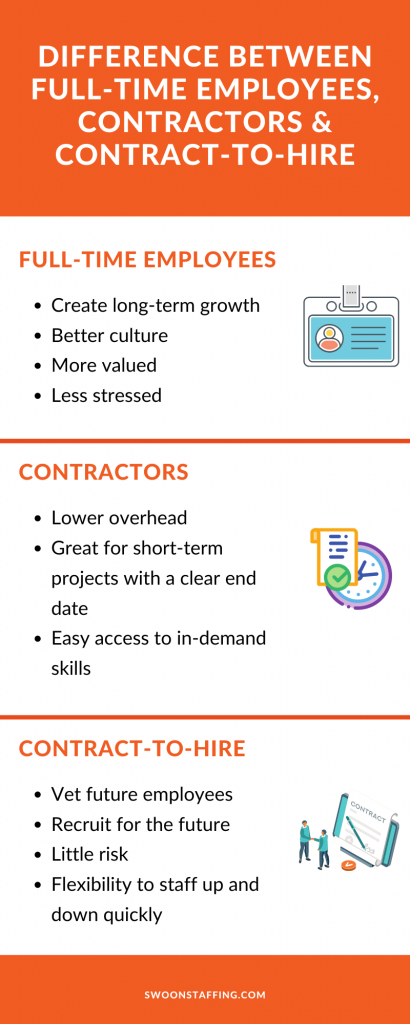
Direct Hire Placement: A staffing agency adds permanent staff directly to another company’s payroll.
Temp Staffing: A candidate is hired as a solution for unpredictable workloads, project work, seasonal peaks and other short-term needs such as a leave of absence. They are employed by the staffing agency and all positions have an established timeframe.
Contract-to-Hire: The selected candidate begins their employment contract on the staffing agency’s payroll, not the client’s. They are placed in a short-term position for a set period, with the possibility of being hired as a full-time employee at the end of that contract.
Advantages
Direct Hire:
- The candidate is sourced as a full-time employee from day one. This allows you to avoid the annuity costs associated with contract/contract-to-hire employees and your new hires feel that they are part of the team right away.
- Direct hire roles are more attractive to passive candidates. Thus, allowing you to see a higher number of highly qualified candidates.
- This is evident because you can offer better perks and benefits packages to attract the type of prospective candidates you are looking for.
- Typically, there is stronger employee commitment. These employees often have a better sense of stability and security within the company that they are placed in.
Contract/Temp Employees:
- Saves your company time and money. These employees allow you to get the help that your company needs quickly without the cost and effort of recruiting and hiring full-time staff members.
- Offers flexibility by helping companies fill openings quickly that are caused by seasonal demand or employee absence. This way, companies can meet demands while not overstaffing or requiring current team members to take on more tasks.
- You can tap into skills that you currently don’t have inhouse. This way, you can quickly complete projects that your current team members don’t have the skills or experience.
Contract-to-Hire:
- The ability to experience a trial run. You can “try before you buy” and minimize the risk of an employee not being a fit long-term.
- There is more budget flexibility.
- These positions can give a company the time to work a new full-time employee into the budget while still getting the work done.
- Contract-to-hire employees are typically not eligible for benefits until they become a full-time employee. However, in most cases, they get the option of receiving benefits through the staffing agency they are working with.
- The employees are typically only paid on an hourly basis for the specific hours worked rather than a fixed salary.
- You can save on specialized skills that you don’t already have in-house. Contractors can help you complete projects that require skills and experience that your full-time staff doesn’t already have.
- Contract-to-hire can help you accommodate growth. We can’t always predict when growth or expansion needs to happen, and this can be extremely difficult for your full-time employees to take on additional work themselves when they have a full workload already. During these times, you can leverage contract staffing to complete the necessary extra work.
How Does Contract-to-Hire Work?
When you use a staffing agency to fill contract-to-hire positions, they will handle many of the front-end recruiting tasks, such as:
- Sourcing candidates
- Reviewing resumes
- Conducting initial screenings
Once a candidate has moved through these stages, they will be passed along to the client for final interviews. The company will then make the final decision with insights and guidance from the staffing agency if needed. Once a candidate is selected and accepts an offer, they will begin their employment contract on the staffing agency’s payroll rather than the client’s.
The duration of these contract-to-hire positions varies from one month to being indefinite. However, they will usually run from three to twelve months. In most situations, the client will have the opportunity to convert the contractor to a full-time hire in a manner that meets their needs.
Why Would a Company Dismiss the Idea of Hiring a Contractor?
When it comes to a company dismissing the idea of hiring a contractor, a few things come to mind.
- Contractors can be more expensive than hiring a full-time employee, depending on the situation.
- It’s more cost-effective to pay for a full-time employee than a contractor if you are going to keep them on for 2-3 years in some cases.
- Operating expenses (OPEX) are the cost of doing business, such as employee wages, utilities, insurance, and rent required for the day-to-day functioning of a company (including employee wages). In contrast, a capital expense (CAPEX) is an expense that a business incurs to create a benefit in the future (such as an IT project to upgrade a system that could require contractors to come in and complete that project). OPEX and CAPEX are treated quite differently for accounting and tax purposes and could be the reason for hiring one over the other.
- Companies don’t want to lose intellectual property. However, as a company hiring a contractor, you can have a written agreement executed before the commencement of the employment relationship. This agreement can assign to the company any and all intellectual property created by the employee during their employment with the company.
- Companies don’t have a history of hiring contractors and are unaware of the process – this is where we can come into play and help you understand the best path for your needs.
- Companies have budgetary challenges and might not be able to afford the contractor fees on top of the full-time employee fees if they choose to hire after the contract is up.
- Employees miss out on getting proper integration into the company culture.
- A company is challenged to bring in revenue, thus putting projects on hold that they could bring in a contract-to-hire to complete.
Why is Direct Hire Skyrocketing During COVID-19 and Not Contract-to-Hire?
At the beginning of this recession, we thought that we would see an increase in contract-to-hire over direct hire placements. When asked, Joe Matalone – EVP, had a great response to why he believes that direct hire placements are skyrocketing now.
“I think we can find our answers here in analyzing the U.S. stock market and employment data at the beginning, middle and present times of COVID-19.
Beginning of COVID-19: What we saw in the very early days of COVID was simply confusion at all levels as it came at us so quickly – which frankly jolted the global markets. Millions were furloughed during the pandemic, with a record 20.5 million U.S. jobs lost in April. However, some companies were and still are hiring thousands of new employees to keep up with shifting consumer demands and spending habits. That being said, some employers may have cut too deeply (particularly in the departments of Talent Acquisition) and have now realized that they need to hire again and hire quickly to maintain any competitive edge. Suddenly, there is a fresh wave of talent that the employers have not seen in many years due to the historical run of strong overall employment numbers.
Present Day: Fast forward to the present; it feels like the market is tightening again in specific skillsets, most notably in digital and technology, which were more resilient to the downturn. It’s almost as if we’re not in a recession any longer.
Final Thoughts: I think this will be the fastest end to a recession ever! Some areas of the market will take longer to recover, such as travel/retail/hospitality. Some employees that had been placed on leave, laid off, or maybe not treated so nicely during the last few months are looking and have options. You add in the embracement and acceleration of hiring remote workers now, and the talent pool gets very large.
During economic downturns, candidates are unwilling to leave their current “permanent” position for anything but a direct-hire position. When the country is in the middle (or hopefully tail end) of a pandemic, benefits such as health insurance are top-of-mind for everyone.”
Joe Matalone – EVP at Swoon
Conclusion
It’s important that you take a look at what is best for your company at that time. What works for one company might not necessarily work for yours. Will your company benefit more from having a direct-hire placement for a full-time employee, a temporary contractor or a contract-to-hire so that you may “try before you buy”? There is no right or wrong answer. It all just comes down to what you think will be the best, and if you have any questions along the way, we are always here to help!
We all know that some of our team members are just dying to get into the office, while others might be skeptical. Having a hybrid team allows your employees to choose what’s best for them. However, it means that you will need to adopt a new type of leadership.
Converting all workflows to remote-first, even for those working in the office, is going to be essential. Why is this? In-office workers may feel like they are over-rotating to make sure remote team members feel included. In contrast, those working remote might be sensitive to communication gaps.
Hybrid team: “A flexible work structure where some employees work remotely, and other team members work from a central location or office. Hybrid team structures allow employees to decide whether they prefer an office environment or working from anywhere remotely” (OWLLabs).
- Employees don’t feel pressured to go into the office if they don’t feel comfortable.
- Those that want to return to the office can
- It makes it easier to follow social distancing regulations.
- It helps reduce the spread of coronavirus.
Team Meetings
Take a minute and think about your meetings before COVID-19 and while working remotely. What worked and what didn’t? You will want to reconstruct your sessions to be engaging, productive, helpful and friendly to your remote team members. But how do you do this?
One way would be to have all team members join the meeting virtually. This will ultimately help reduce the number of informal conversations that happen after remote employees leave the call and will also help reduce the possibility of coronavirus spreading around the office.
Another way would be to have your in-office employees join in-person and remote employees join virtually. With this option, you will want to have a set way of relaying information that may arise after a meeting to those that are remote, whether that be an email or making a note to discuss it during your next team meeting.
Define Clear Working Hours
This will help your remote employees step away from work. Also, it will allow you and your team to know who is working when and where. Sharing work calendars is a great way to boost the visibility of this information and help everyone know when they can expect someone to answer emails or phone calls.
Understand the Benefits of Each Working Situation
Once you understand the benefits, you will want to be sure that you ensure fairness. For example, remote employees don’t have to commute and can pick up their kids from school or schedule appointments since they can make up the hours afterward. To ensure fairness, you might encourage the same for your in-office team members by giving them some flexibility during working hours. All in all, you will want to be sure you lead by example, and whatever you allow yourself to do, you also allow your employees to do the same.
Setting Aside Time for Each Team Member
You should give the same amount of attention and support to both your remote and in-office employees, no matter their role.
Measuring Performance in a Fair Way
If your focus is still on effort or number of hours at desks, you may want to rethink to basing metrics off set objectives. You want to concentrate on the quality of the work that they’re producing, not on how much time they spend at their desks. Also, look at the career progression paths set into place and ensure that they’re fair for both in-office and remote team members.
Communication
The biggest challenge with a hybrid team is going to be communication. The good news is that we have a lot of options when it comes to virtual communication than ever before! We have Zoom, Google Hangouts, Teams, etc. You probably became more familiar with these while social distancing. For your hybrid team to stay connected and not have any team members feel out of the loop, continue virtual team meetings either on a daily or weekly basis. This will be the perfect time to hear announcements, stay connected, have team members brainstorm ideas to overcome obstacles that someone might be facing, go over professional or personal highlights and talk about each person’s goal for the day or week.
Team Dynamic
If you know that your team’s communication styles conflict, you might want to put measures into place to combat this before it becomes an issue. When communicating virtually, especially over email or chat, there’s more room for misunderstanding someone’s intentions. Having frequent one-on-ones with every team member is going to be essential in combating this issue. This will allow you to catch conflicts before they escalate. Anxieties around job performance are usually higher in remote settings. This may continue for a while, even for those that return to the office because of COVID-19.
Relationship Building
It’s going to be hard to connect with coworkers for those in the office due to social distancing and even harder for those that are remote. Do you have outlets in place for all your team members to come together? A fun and simple group chat or scheduling some team activities such as a virtual yoga session or a trivia night might do the trick! Get your team included on this and see what they would like to happen. Take these suggestions into consideration and implement what you think will work for everyone. Make sure whatever you decide to do, remote employees can join in.
Click here to learn more about setting up and creating a Virtual Happy Hour for your team!
Having a hybrid team for the first time will be a lot of trial and error to see what will work best for you and your team. One solution for one organization might not work for another. This is the time to experiment and really make this new “norm” something great! If you need help on figuring out your new norm, take a look at our previous blog post, Future of Work!
As the pandemic has shifted work trends, businesses must continue to be agile, set employees up for success, establish safety measures and discover the new normal. We wanted to share a few ways we are adapting within our company as well as provide some insight into how work trends are evolving.
According to Gartner analysis, 48% of employees will work at least part of the time in a remote environment after being allowed back into our offices. But how will this look? It will all depend on your company and the work environment that you want your employees to have. However, encouraging employees to work from home, at least part of the time, will help stop the spread of COVID-19 around the office, and it will also help prepare your company if a similar situation arises.
At Swoon, we’re offering a work from home extension option for the remainder of 2020. Offering this extension allows our employees to make a conscious decision about what would work best for them and their families—keeping safety and comfortability a top priority.
Employers played an expanded role in an employee’s mental well-being throughout the time of social distancing and working from home. This has ultimately changed the way employers view the employee experience. You may have started to focus on increasing your employees’ social engagement and morale, which in turn helped increase productivity and reduce burnout. This is something that most companies should continue to implement, even with offices being open.
At Swoon, to improve moral, we implemented Innovation Kitchens (IK Breaks) and will continue them for the foreseeable future. They have been a great way to increase morale, involve the entire team and make sure employees take breaks throughout the day. Some examples of what we’ve done in the past include:
- Workout – A 30-minute workout to get us all motivated and finish our day out strong.
- Yoga – A Slow-Flow Yoga class hosted by an old pal of Swoon, a certified yoga and meditation teacher.
- Dance Party – A DJ set put on for our team to socialize and have some fun.
- Full-Body Strength – A 30-minute full-body strength workout led by one of our respected Armed Services members who also happens to be the sister of one of our Swooners! Click here to see her page.
- Flower Arranging – A how-to on arranging a simple bouquet that you can pick up at your local grocery store.
- Tiger King Trivia – Most of us binged the whole thing, so of course, we had to have a friendly competition around it.
- Foreign Language Class – A class around learning a few pleasantry words in Russian, Spanish and Polish.
Now, more than ever, transparency has been a huge factor in employee morale and happiness. Being transparent in company decisions leaves out any question about what will happen in the next few months. It allows your employees to prepare and feel supported during these unknown times.
This will be true for larger cities where most people use public transportation. It’s doubtful that we’ll see crowded buses, trains and metro stations during peak hours anytime soon. Why will it be this way?
- Many people will be wary of using public transportation unless it’s necessary.
- Organizations will start to stagger their shifts.
- Many employees will still work from home at least part of the time.
- Public transportation will have limits and regulations to follow.
Of course, most of us are longing for some face-to-face conversations with our coworkers! We miss the times of being in the office and being able to have connections with those around us. How can we get our employees the time with their coworkers while still being safe? Well, workplaces will need to impose new elements into the office. You’ll need to figure out how to protect your employees and mitigate an outbreak from happening. The office of the future may look very different and might include:
- Getting rid of open floor plans
- Adding plexiglass sheets around desks
- Reconfiguring desks to be 6 feet apart
- Shifts for communal spaces such as bathrooms and break rooms
- Dedicated office entrances and exits
- Temperature checks at entrances
- Removal of common seating areas
- Staggering shifts
- Rotating work from home days and in-office days, so fewer employees are in the office at one time
- Having employees wear PPE
- Increasing sanitation measures
- Increasing video meetings and reducing in-person meetings
In addition to offering the work from home extension at Swoon, we’re also allowing the ability for employees to come into the office if they wish to do so. So, what steps is Swoon taking?
- Getting rid of the open floor plan and creating desk spaces
- Increasing sanitation efforts and requiring PPE to be worn
- Having all employees clean out their desks to ensure they can be deep cleaned at the end of each day
- Having flexible start and end times to make it easier on those who use public transportation

This is the time to go back to the drawing board and say, “what works for our organization and what doesn’t” and utilize those points to make changes as you see fit. It’s also going to be more critical now that as a leadership member, you’re as transparent as possible. Let your employees know what is going on and what steps are being taken. This way, the next few months go as smoothly as possible.
Companies are still hiring but are now faced with a new challenge – onboarding new hires remotely. As employers, it’s important to set the groundwork for bonding, culture and expectations in order to be successful. Being that many of our clients are facing similar challenges, we wanted to share a few best practices that will set you new team members up for success.
Integrating New Hires
Starting your onboarding process before their start date ensures that your new hire will have everything that they need to hit the ground running. Some suggestions on items to send before their first day include:
- Welcome email and team introduction
- HR/company documents
- All proper equipment/technology
- The information they should know before their first day
- Their onboarding schedule—this way they can be prepared for what their first week will entail
- Company swag to feel a part of the team and get excited for their new role

Tech Should Be First Priority
Let’s take a minute and put ourselves in the position of the new hire. Starting a new job can be stressful enough without adding in the issue of not knowing how the various software platforms and communication channels work. We find that sending new hires their equipment and online tutorials/manuals before their first day helps them to feel prepared and eases any unnecessary stress. You’ll want to make sure that you have a follow up IT training scheduled for the first or second day. That way, any questions that your new hires have after watching the tutorials or reading the manual can be answered right away.
Things to cover during your IT training could include:
- Company email
- Group messaging tool
- Video communication software
- File-sharing applications (Google Drive, Dropbox, Microsoft OneDrive, etc.)
- Computer and email security applications

Demonstrating Culture
We know this can be a challenging thing to do through an online platform. But, taking the time to show your company’s culture can really add value to the new hire’s first week. Through video calls, you can accurately demonstrate your company’s culture while offering a way for everyone to feel included in their first week. It also allows you to introduce them to higher-level executives, either through a video conference call or a prerecorded video. Some video topic ideas to show your company culture can include:
- Welcome video or video call from your CEO or President and other team members
- Your culture, organizational values and mission, the history of the organization, etc.
- Inspirational messages from a member of your leadership team
- Retreat, event, volunteering, etc. footage from before everyone was social distancing

Setting Expectations
When working remotely and bringing on new employees, managers should be prepared to set specific goals and expectations early on. You don’t want them to have to wait for their manager or team lead to get online to learn what their next tasks are for that day. This wastes time and may cause unnecessary stress. You’ll want to make sure that your hiring managers:
- Develop and share a task calendar with their new hires after their training and onboarding sessions are complete
- Define short-term and long-term goals
- Schedule weekly one-on-one meetings to discuss upcoming projects, progress, resolve any issues they are facing, and overall just check in with how things are going
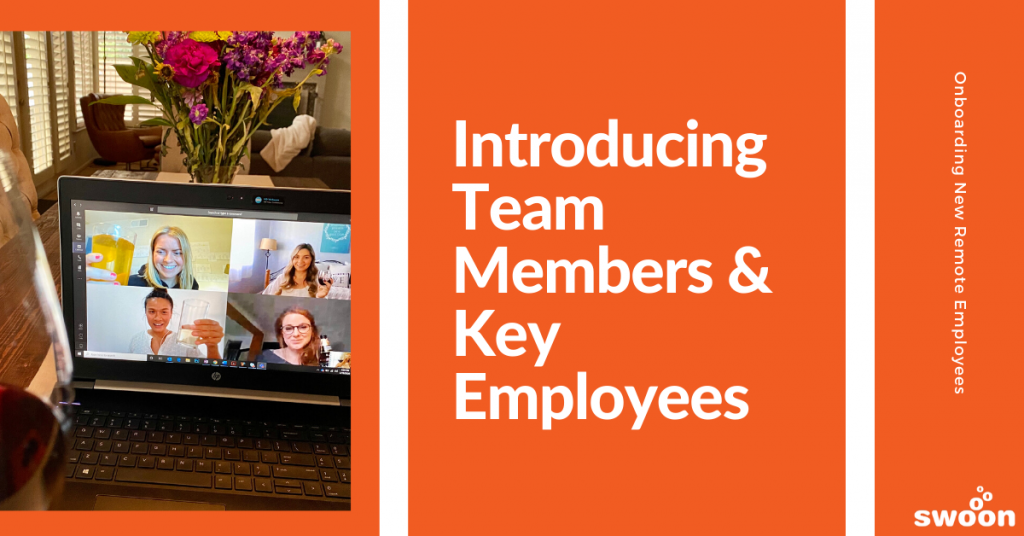
Introducing Team Members and Key Employees
We all know that starting a remote role can leave some feeling isolated and even left out from the team. They haven’t had the chance to connect with the team and doing so online can prove to be very challenging. But, building relationships is well worth the effort! Set up one-on-one meetings and/or a group call so employees can meet the people they will be working with. Not only does this open a path for communication, but it also allows them to feel included within their team. Try having the manager set up bi-weekly team meetings, virtual happy hours or an open chat channel to give everyone on their team time to talk with their new coworker.

Arrange Trainings
Now we know that this is probably self-explanatory, but make sure you set aside time for the new hires to sit down with a hiring manager or a team member to train them on their role. This can be very similar to how you train in the office; however, you will need to adapt to be virtual. Screen sharing is a great way to keep things simple. We find that this is the easiest way to adapt, and it allows the new hire to ask questions in real-time, something that might be more difficult if you were to only do a prerecorded training.

Improving Your Process
Continue to improve your onboarding process to find what bests works for your team and your culture. Ask for feedback and don’t be afraid to be creative in tackling these new challenges. We predict remote hiring will become even more common, so this is a great time to build onto an ongoing process.
Need some more help with your remote onboarding process? We would love to talk you through what has worked for us in the past and answer any questions that you have!
Times are tough, but so are you! Don’t let your fear of the unknown cause you to decrease your efforts in finding a job. There are still companies hiring and lots of them. You need to refocus your efforts, and eventually, you will land an opportunity!
Take a look at our best advice suggestions for job seekers for more information on how to refocus your efforts!
Learn New Skills
Now is the perfect time to dig into learning that new skill you’ve been putting off because of time limitations. This could help you stand out from other candidates that are also going after the same positions that you are.
There are many resources available to help you learn new skills such as metadata design, Salesforce integration, and AI for professionals in the Tech field. Take a look at sites such as Lynda.com, YouTube, and LinkedIn Learning, to name a few. These sites have an abundance of video courses in pretty much every field for professionals to boost up your skill sets.
Pro Tip: Make sure you are continually updating your resume and LinkedIn profile!
Strengthen Your Mindset
Listen to podcasts, take an online course; just make sure that you’re strengthening your mindset.
Strengthening your mindset also means taking breaks when you need them. Make sure you’re staying positive and motivated throughout the day. Go for a walk outside, play catch with your dog, or play a game with your kids! Do something that makes you happy and will take your mind completely away from job searching for at least 30 minutes to an hour!
Leverage LinkedIn
We’re sure that you already know the importance of utilizing your LinkedIn profile when applying for jobs, but do you know how to make your profile stand out?
Well, first things first, let’s cover the basics. Make sure your profile is 100% up to date. Your previous job is listed and goes into detail about what you achieved during your time at the company. Your most important skills are listed – don’t just put the maximum amount of skills that LinkedIn allows. You’ll want to make sure that you’re able to back up the skills you list with achievable results and items you accomplished to achieve those skills. Employers are looking at your skills, and anything on your LinkedIn profile is fair game for them to ask about, so make sure you keep this in mind!
Next, update your profile picture, banner, header, and your about section to stand out. Show your personality (while still being professional) and make sure you don’t just copy and paste from your experience section! It’s also vital that you have a professional profile picture and banner. We know that LinkedIn isn’t everyone’s forte, so reach out to us if you would like some help! We’re always here to provide feedback or give you suggestions!

Don’t be Afraid to Ask for Referrals
Utilize your network to see who might be hiring. You might have success by reaching out to the decision-makers at a company that you want to work at. Utilize a soft opening when reaching out to these people. Open the conversation with, “I am looking for a job in X, do you know of anything or anyone hiring at this time?” Even if that company isn’t hiring, sometimes getting advice and relationship building will open doors for you. It’s also a good idea to go to virtual networking events. This will allow you to talk to different people who might know of a possible opening for you to look at.

Get Clear on Your Value
Companies are seeing high volumes of resumes. What are the top three reasons someone should hire you? What’s one thing that makes you stand out from the rest? Be sure that you have this down before jumping into an interview.
How would you go about figuring this out? Well, think about your accomplishments within your previous position. Success stories are really impactful and help you stand out from the rest of the candidates. Hiring managers want to see how you and your skill sets can add value to their company. Giving them results about what you’ve already accomplished for other companies is the best way to do that. How do you go about writing your success story?
Step 1: You’ll Want to Choose and Format Your Success Story
Make sure the story is relevant to the role you’re applying for. You don’t want to just include a success story to have one. You want to make sure that it will ‘wow’ the person reading your resume and make them want to learn more about what you can do for their company.
You want to be able to explain the success story in a way that other people will understand it. One way we recommend doing this is to split up your success stories into the following categories:
- Fixed: You were able to identify a problem and correct it. Make sure you explain how you went about solving the problem and the results that you had after you settled it.
- Improved: You were able to take an existing situation, challenge, service, or product that worked before and made it better. Something that you can talk about would be ways that you were able to save your company money.
- Created: You were able to build a new process, service, or product entirely from scratch.
Step 2: Leave Out Any Tactics
Make sure you start with a draft of the success story
- Explain the initial situation, your actions and the results or impact that you had.
- Since you want this to be in a bullet format, start with the model, SAR (situation, action and result). You want a significant impact with few words. Leave out any tactics as they add too much detail. Save tactics for the interview.
Step 3: Include the Right Metrics
You want to make sure that the metric increases clarity and impact and really shows the employer what you have done in the past and can do for them!
Utilize the following metric categories to set up the metrics and how you include them in your resume:
- Time: How much time did your success story save? Think about months, days, or hours that this saved you or your team.
- Volume: Think about the units made, number of tasks/projects, or hiring and growing a team – “I improved quality control, resulting in 50% fewer product returns.”
- Money: Take into account the money you made your previous employer as well as the money you saved them.
The best tips to keep in mind when it comes to the metrics on your resume are:
- You can always combine metrics to increase the power of your success story.
- Most of the time, it’s beneficial to include a unit of volume after a time or money metric.
Define Your Job Search Process
Determine the companies that you might want to work for.
Decide how many hours you’re going to work each day and stick to it! Another way that you could manage your time is to choose several jobs to apply to in a day. Make sure that you’re staying positive and don’t give up. It’s going to take a little longer for you to get interviews right now, but you will eventually get some with persistence.
Pro Tip: You should your resume for each job! This not only provides them with the keywords they’re looking for but also shows your determination! Make sure that you’re only applying to the jobs that you’re really excited about. Hiring managers want to know candidates are passionate about the position. You want to show your passion for the job that they have open – don’t just copy and paste your resume to send to them. They receive hundreds of resumes in a day. You want to stand out, offer value and make sure that your skill sets align to the job description that they posted.
Test Your Technology
You landed the interview, now what? Companies are doing off-site, online interviews. You must test your network connection before your interview. This way, you know how the software works, and that your interview will go as smooth as possible with limited issues.
Technology isn’t fail proof, and things happen, don’t stress if something isn’t working right. Just contact the person who set up your interview and let them know as soon as possible.
The Interviewing Process – It Might Take Longer Than Normal
You might not realize it, but this is tough for employers, too! Employers want to get to know their candidates and decide who is the right fit—not just in qualifications but in personality.
Just remember, it’s going to take a while to get through all of the interviews. It’s also going to take time to compile the data from these interviews. They may want to wait to hire you until they can meet you in person, or they may even want to do several video calls before making their final decision. Above all, be patient and stay positive!
Looking for Your Next Opportunity?
We want to help you! During every step of the process, from interviews to debriefs, we’re here to be your guide. Interested? Take a look at our job board and reach out to us for the next steps!
December is here and that means most people are anxiously awaiting the holidays (I know I am). With after work happy hour celebrations, volunteering, and shopping for everyone in your family plus more, this is one of the busiest months of the year. That’s why we need to be aware of how we are spending our time, especially in the workplace. Here are some Swoon tips on how to maximize your productivity and better manage your time so you can crush your year-end goals!
PLAN AHEAD
It seems obvious, but like you have heard hundreds of times, if you fail to plan, you plan to fail. Make sure to have a game plan on how to achieve your goals before arriving at the office each day. Many of our recruiters spend time each evening getting together a candidate list to call first thing the next day. Didn’t get to all the day’s emails? Answer them during your morning commute if you take public transit so you don’t have to waste your morning hours with planning and can get straight to the big stuff. Writing out a rough list of what you need to get done for the next day before you leave the office each night can be very helpful. By knowing what needs to get done and setting a task list for exactly how you are going to tackle it, you set yourself up for more success. Bonus points if you write a task list and timeline over the weekend to be a superhero the next week!
MEETINGS
We’ve all been in meetings where Bob and Jane speak about the same topic in 10 different ways and explain things that could have been sent in a quick email. Frustrating. Try to avoid meetings when possible. Of course, teamwork and collaboration are key, but a quick face to face with someone or grabbing a coffee for 15 minutes can be just what is needed to make sure everyone is on the same page. Think to yourself before scheduling your next meeting: Could I explain this in an email? How many people are collaborating; could a phone call be just as effective if not more so? This tip is not meant to discourage meetings altogether, but simply to remind you to use your, and others, time as efficiently and as wisely as possible.
FOCUSED MINDSET
Your mindset is a huge part of your productivity and overall performance throughout the day. Studies have revealed that each day, employees have a 4-hour window of focused concentration maximum. Therefore, work to your strengths, and ask yourself if you’re more productive after your morning coffee or are your more focused on a full belly after your lunch break? Once answered, simply, time-block your schedule to maximize your output. No excuses during time-blocks – be like Nike and “just do it”. This is a time to act with self-interest: set agendas for even the quickest of meetings to avoid wasted time; appoint a better-suited person to complete tasks asked of you to avoid “stolen time” from your schedule; recognize your roadblocks and do what you can to bypass them (clean cluttered inbox, mute the constant interruptions on your phone, alert colleagues you will be out of pocket for the designated timeslot, etc. It is important, especially on long-term projects, that you set goals along the way . . . but start at the end! Sometimes a project conclusion can seem so far away that it becomes overwhelming; however, if you set deadlines, benchmark the project, and delegate whenever possible – your mind will be less scattered, and you will stay motivated. Plus, you will allow others the opportunity to shine and become involved by delegating. Having a mindset that allows for flexibility within your day but still adhering to the goals put forth will allow you some agility along the way to deal with the unforeseen details while staying laser-focused on the end goal.
As you are working this week, try to implement at least one of these tips into your day. Notice the difference in your productivity and quality of work!
As technology continues to advance and the need for niche skillsets in the workplace continues to grow, the importance of having a diverse team is more critical than ever. Swoon prides itself in being a high-performing company with employees who have the knowledge and expertise to deliver above and beyond expectations. Therefore, it is the primary focus of ours to hold, develop and recruit individuals who are as forward-thinking, globally-minded and diverse as the consumers and clients utilizing our product. We realize that diversity and inclusion are some of the most vital entities in a company continuing its path of exponential growth. They allude to the technological advances that we stand upon today and more importantly, the ones that we are most looking forward to in the future.
The Research
Return on Investment has become a large pillar in the reasons for the increased recruitment and interest of diversity and inclusion professionals. This is because studies have shown a direct correlation between diversity and bottom-line gains. Free market research has proven that often, a more diverse company yields an increased number of consumers. According to a new study from Forbes and McKinsey, of 366 public companies examined, those who remain in the top quartile for racial and ethnic diversity are 35% more likely to have financial returns above national industry medians. Could it be because consumers are looking for an image of themselves in the product they are cultivating? Just maybe!
The way Swoon looks at the importance of diversity is simple. With it, there are several more perspectives, helping us to be a better company and continue our expansion.
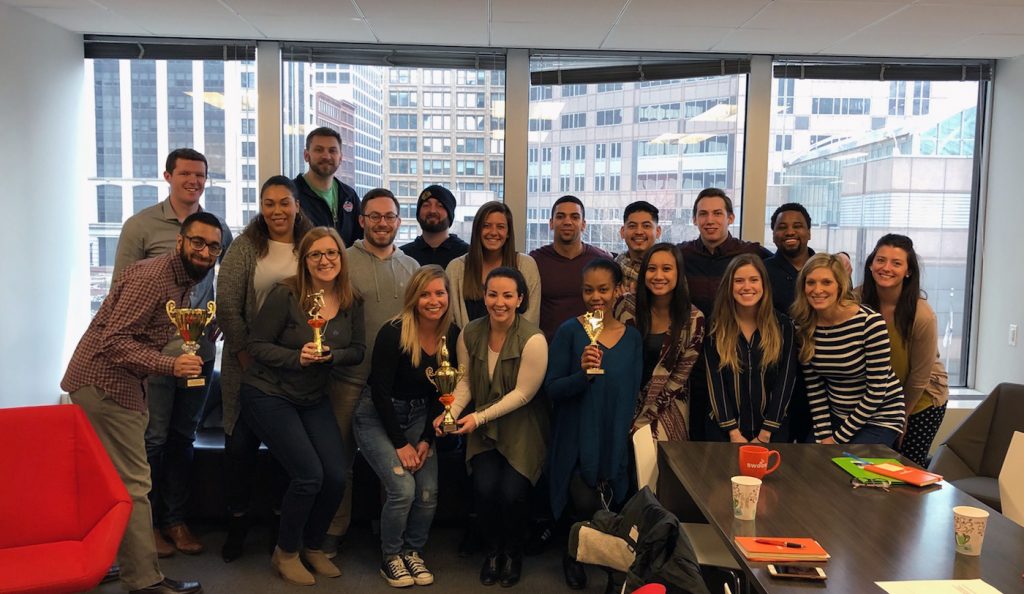
“I feel Swoon diversifies its staff and differentiates itself from competitors by simply not being afraid of change. Working in this manner has been to our advantage with candidates and clients alike,” said Talent Acquisition Specialist, Nashana Alexander.
According to Business Insider, a study showed that diverse teams make fewer mistakes and can look at critical facts more closely. This interesting study also found that culturally diverse groups were more likely to come up with new, innovative products in comparison to the typical homogenous teams.
“Diversity in the workplace is so important because people [our consumers] can see their stories being told, and it allows people to see themselves within others that are like them. It also supports variance in thought because when different ideas are brought to the table, innovation and creativity are bred,” said Talent Acquisition Specialist, Ashley Andrews.
Some have also found that diverse companies are more profitable because they attract the most qualified/skilled employees across the board. When we discover the best talent in non-segmented groups, it can only be assumed that the best of the best employees, beyond typical classifications, can be selected. Here at Swoon, the many cultures that have been put together under one space allow the feeling of empowerment to flourish within the office. An eagerness to learn, grow and collaboratively succeed has become more prevalent since inclusivity became a top goal of ours. Without even realizing it, it has also improved profitability because the diverse community within Swoon has influenced the way we work – both by ourselves and together.
Swoon and Diversity
The Swoon Analytics team noted that from June 2017 to today, we have exponentially grown in staff by 56 percent! We raised our earnings last year from the year before and are expecting to increase our revenue by 28 percent this year!
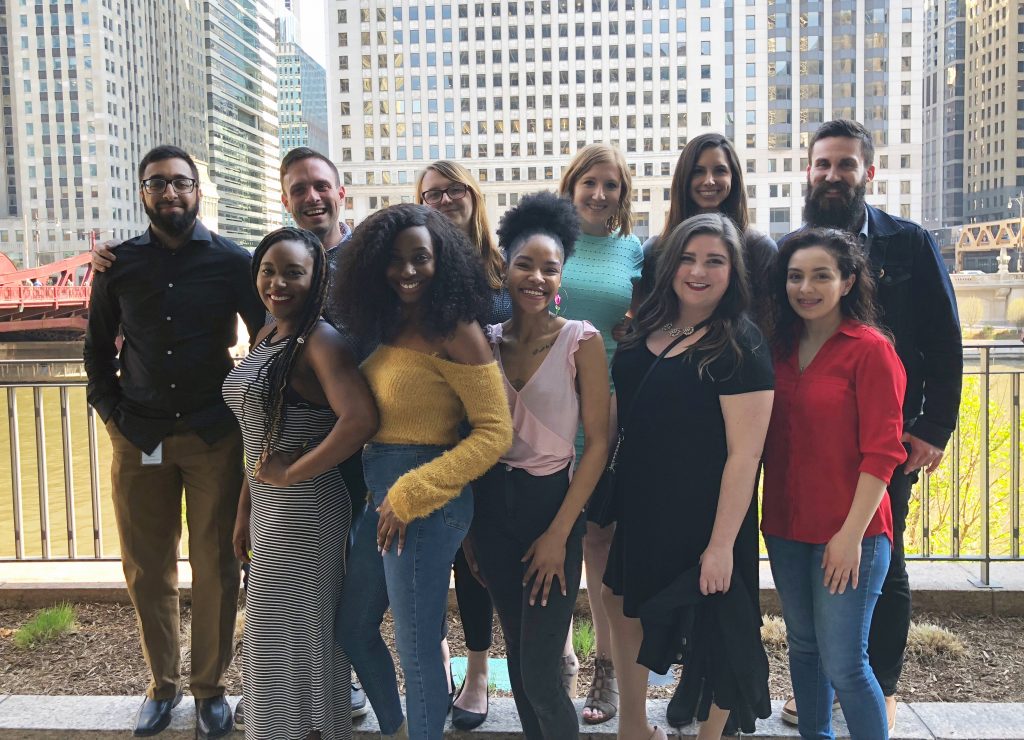
This summer, we decided to take things up a notch by opening a fully-equipped office in Toronto, Canada. By doing this, we have begun to realize the opportunities that come with having a globally-impacting company dually for the minds of the people in it and for clients we serve. Being able to communicate effectively in different parts of the world is a substantial benefit because it allows us to understand the many cultural nuances and concepts that come with this international expansion.
The Momentum
Recently, organizations have heavily invested in developing STEM youth, and with this, we acknowledge the bright future ahead of Swoon! Because organizations are instilling programs for the diversification of the STEM field, companies like us who are constantly in search of qualified professionals will get the excellent opportunity to expand from this effort.
Swoon, our woman-owned company, shows us all that diversity is the strength we need to keep moving forward. We anticipate our company becoming a leading force in diversity and inclusion within the staffing and recruiting industry!
Article by: Osora Mojekwu and Timothy Dixon-Traylor
There’s nothing more frustrating than feeling you’ve exhausted all of your options in a job search. You’re sure that you’ve turned over every stone and hunted down every potential lead. That doesn’t mean that it’s time to give up! Instead, try taking a new, unorthodox approach to your job search.
Target Your Ideal Position
Most people don’t dream of spending Monday through Friday from nine to five behind a desk. Chances are, this wasn’t the type of job you thought you would have when you were a kid. Instead of letting yourself get bogged down by what you “should” be doing, try taking a look at the types of jobs you’d really like to have and the type of company culture that you think would be a good fit for you. You might be surprised by how much easier it is to find your ideal job than it is to find one that’s just “good enough.”
Search for Companies not Jobs
As you think about your ideal job, don’t just consider the exact position that you think would be a great fit for you. Think about the type of company you’d love to work for. Is it a company with a social conscious mission? One with a fantastic company culture? Choose the type of company where you can see yourself staying long-term. Working your way up from within is often easier than starting out in that top position you have your eye on, and when you love your company, you’re more likely to enjoy going to work every day.
Apply for the Job You Want, Not the One That’s Open
A large percentage of the best available jobs are never posted. Instead, they’re filled through word of mouth, through recruitment agencies, or by quietly reaching out to people who are considered ideal for the position. If you’re looking at a company, imagining yourself there, and thinking that it would be the perfect fit for you, don’t let the lack of an open job posting stand in your way! Go ahead and send in your resume and a cover letter. Even if it doesn’t yield a job now, it might mean an open door down the road.
About Swoon
We are recruiters with an unorthodox method and a proven track record of temporary and direct hire placements. Through an approachable method to recruiting we get to know our clients and candidates then connect the best and the brightest with Fortune 1000 companies nationwide. Are you ready to be Swoon’d?
Okay, you’ve made great contacts at industry meet-ups, overhauled your Twitter and Facebook accounts to present a more professional image and given your LinkedIn profile a long overdue update to offer an excellent introduction to prospective employers. So, what is the next step?
Choosing the correct type of resume and tailoring it to each job you apply for is vital. Your resume plays an essential role in securing interviews during your job search. Here are three types of resumes that will increase interview opportunities.
Chronological Resume
Listing job history in chronological order starting with your most recent job and working backward is the most standard resume format. This format is useful for people employed in the same field for a long time who want to apply for jobs in the same or similar field. Also, they have few gaps in their employment history.
Functional Resume
A functional resume brings your skills and abilities to the forefront while minimizing your work history. People who choose this format usually have significant gaps in their employment history, have been out of the workforce for an extended period or have little to no work history.
Combination Resume
The combination layout captures attention by first highlighting relevant skills and capabilities like a functional resume and then supporting them with your chronological work history. People with limited work history support their skills with volunteer positions or education. If you are a new graduate, entry-level job seeker, older worker or ready to make a career change this format is an excellent choice.
When you have determined which resume type applies to your situation, enhance your chances of being selected for an interview by tailoring your resume to each job inquiry. Accomplish this by incorporating keywords from job descriptions directly into your resume. Also, add the URL for your Twitter handle and LinkedIn profile to your contact information on your resume to show prospective employers that you are proficient with social media platforms.
Use these guidelines to help you prepare a great resume and then contact a leading recruiting agency to help you land the perfect job.
About Swoon
We are recruiters with an unorthodox method and a proven track record of temporary and direct hire placements. Through an approachable method to recruiting we get to know our clients and candidates then connect the best and the brightest with Fortune 1000 companies nationwide. Are you ready to be Swoon’d?
Most of the mistakes people make when job hunting stem from a lack of self-awareness and rigid thinking. The people who get jobs are the people who understand what employers are looking for and present themselves best in that light.
1. Use your online time wisely.
The internet pushes so many things at you that it can lull you into a state of pure reaction. You click, you read, you respond to an email, you like a few things, you send a message. All of these things can have some meaning when it comes to finding a job, but it’s easy to get carried away and pushed into distraction.
2. Your Resume isn’t a list, it’s a communication tool meant to position you as the ideal candidate.
Too many people fail to think about how their achievements will be received. They don’t make it easy for people who are hiring to see that they would be a great candidate. They present the person they want to hire with more work to do, as opposed to providing a solution — which is what they want! Duh.
3. Talk about how you overachieved.
Maybe you can get a job by showing how you do only what’s expected of you, but most employers don’t want to have to keep working to find you work. They want to see that you took an active role and forwarded the company’s strategies and objectives on your own steam.
4. If no one’s returning calls, re-examine your approach.
Maybe you’re telling your friends you really need a job because your boss is such a jerk. Well that’s probably not going to strike a positive cord. Maybe you need to express positive curiosity and don’t make people feel like they have to solve all your problems. Ask if they can introduce you to so-and-so or have lunch with you to discuss the type of work they do.
5. Back to the online thing: Ok you need an online identity.
Liking an exquisite picture of a corn beef sandwich on Facebook doesn’t really bolster your online identity. However, you should have some sort of footprint online for people to learn more about your skills and talent especially if you’re angling for a higher position.
6. Be as specific as possible when talking about your success.
Any good storyteller will tell you that it’s the details that seal the deal. It’s what people remember. It’s what makes everything real. So it’s important to have backstories and context to all the challenges you met head on.
You may not think of any of this as fun, but given how dynamic our economy has become and how the path to real career growth is laid out, these are skills you are going to need to build on. You can’t do it all overnight. Work at these things and hone them. This is what gives you power over your own destiny, yeah, it’s really that important, but don’t worry. You can do it.
About Swoon
We are recruiters with an unorthodox method and a proven track record of temporary and direct hire placements. Through an approachable method to recruiting we get to know our clients and candidates then connect the best and the brightest with Fortune 1000 companies nationwide. Are you ready to be Swoon’d?