

As the pandemic has shifted work trends, businesses must continue to be agile, set employees up for success, establish safety measures and discover the new normal. We wanted to share a few ways we are adapting within our company as well as provide some insight into how work trends are evolving.
According to Gartner analysis, 48% of employees will work at least part of the time in a remote environment after being allowed back into our offices. But how will this look? It will all depend on your company and the work environment that you want your employees to have. However, encouraging employees to work from home, at least part of the time, will help stop the spread of COVID-19 around the office, and it will also help prepare your company if a similar situation arises.
At Swoon, we’re offering a work from home extension option for the remainder of 2020. Offering this extension allows our employees to make a conscious decision about what would work best for them and their families—keeping safety and comfortability a top priority.
Employers played an expanded role in an employee’s mental well-being throughout the time of social distancing and working from home. This has ultimately changed the way employers view the employee experience. You may have started to focus on increasing your employees’ social engagement and morale, which in turn helped increase productivity and reduce burnout. This is something that most companies should continue to implement, even with offices being open.
At Swoon, to improve moral, we implemented Innovation Kitchens (IK Breaks) and will continue them for the foreseeable future. They have been a great way to increase morale, involve the entire team and make sure employees take breaks throughout the day. Some examples of what we’ve done in the past include:
- Workout – A 30-minute workout to get us all motivated and finish our day out strong.
- Yoga – A Slow-Flow Yoga class hosted by an old pal of Swoon, a certified yoga and meditation teacher.
- Dance Party – A DJ set put on for our team to socialize and have some fun.
- Full-Body Strength – A 30-minute full-body strength workout led by one of our respected Armed Services members who also happens to be the sister of one of our Swooners! Click here to see her page.
- Flower Arranging – A how-to on arranging a simple bouquet that you can pick up at your local grocery store.
- Tiger King Trivia – Most of us binged the whole thing, so of course, we had to have a friendly competition around it.
- Foreign Language Class – A class around learning a few pleasantry words in Russian, Spanish and Polish.
Now, more than ever, transparency has been a huge factor in employee morale and happiness. Being transparent in company decisions leaves out any question about what will happen in the next few months. It allows your employees to prepare and feel supported during these unknown times.
This will be true for larger cities where most people use public transportation. It’s doubtful that we’ll see crowded buses, trains and metro stations during peak hours anytime soon. Why will it be this way?
- Many people will be wary of using public transportation unless it’s necessary.
- Organizations will start to stagger their shifts.
- Many employees will still work from home at least part of the time.
- Public transportation will have limits and regulations to follow.
Of course, most of us are longing for some face-to-face conversations with our coworkers! We miss the times of being in the office and being able to have connections with those around us. How can we get our employees the time with their coworkers while still being safe? Well, workplaces will need to impose new elements into the office. You’ll need to figure out how to protect your employees and mitigate an outbreak from happening. The office of the future may look very different and might include:
- Getting rid of open floor plans
- Adding plexiglass sheets around desks
- Reconfiguring desks to be 6 feet apart
- Shifts for communal spaces such as bathrooms and break rooms
- Dedicated office entrances and exits
- Temperature checks at entrances
- Removal of common seating areas
- Staggering shifts
- Rotating work from home days and in-office days, so fewer employees are in the office at one time
- Having employees wear PPE
- Increasing sanitation measures
- Increasing video meetings and reducing in-person meetings
In addition to offering the work from home extension at Swoon, we’re also allowing the ability for employees to come into the office if they wish to do so. So, what steps is Swoon taking?
- Getting rid of the open floor plan and creating desk spaces
- Increasing sanitation efforts and requiring PPE to be worn
- Having all employees clean out their desks to ensure they can be deep cleaned at the end of each day
- Having flexible start and end times to make it easier on those who use public transportation

This is the time to go back to the drawing board and say, “what works for our organization and what doesn’t” and utilize those points to make changes as you see fit. It’s also going to be more critical now that as a leadership member, you’re as transparent as possible. Let your employees know what is going on and what steps are being taken. This way, the next few months go as smoothly as possible.
Companies are still hiring but are now faced with a new challenge – onboarding new hires remotely. As employers, it’s important to set the groundwork for bonding, culture and expectations in order to be successful. Being that many of our clients are facing similar challenges, we wanted to share a few best practices that will set you new team members up for success.
Integrating New Hires
Starting your onboarding process before their start date ensures that your new hire will have everything that they need to hit the ground running. Some suggestions on items to send before their first day include:
- Welcome email and team introduction
- HR/company documents
- All proper equipment/technology
- The information they should know before their first day
- Their onboarding schedule—this way they can be prepared for what their first week will entail
- Company swag to feel a part of the team and get excited for their new role
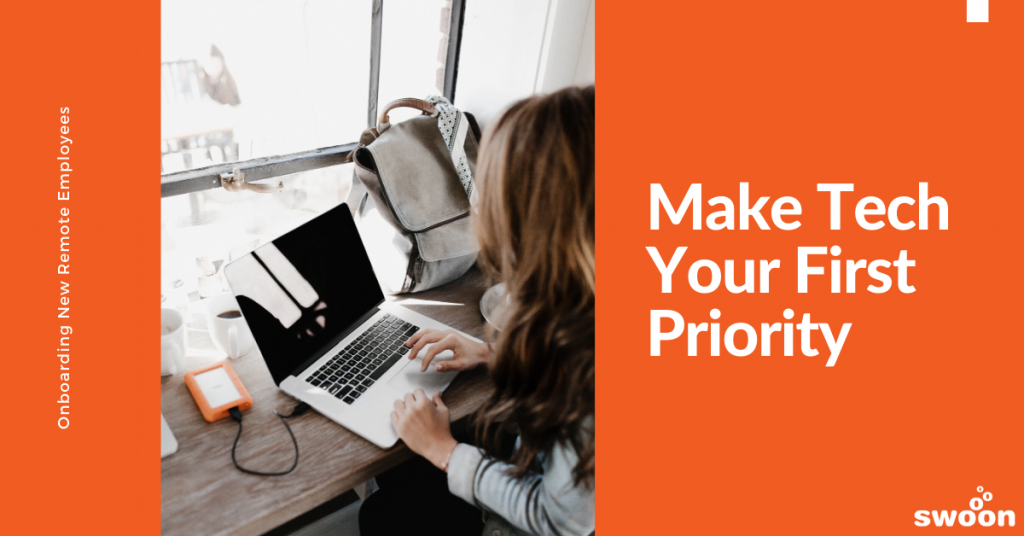
Tech Should Be First Priority
Let’s take a minute and put ourselves in the position of the new hire. Starting a new job can be stressful enough without adding in the issue of not knowing how the various software platforms and communication channels work. We find that sending new hires their equipment and online tutorials/manuals before their first day helps them to feel prepared and eases any unnecessary stress. You’ll want to make sure that you have a follow up IT training scheduled for the first or second day. That way, any questions that your new hires have after watching the tutorials or reading the manual can be answered right away.
Things to cover during your IT training could include:
- Company email
- Group messaging tool
- Video communication software
- File-sharing applications (Google Drive, Dropbox, Microsoft OneDrive, etc.)
- Computer and email security applications

Demonstrating Culture
We know this can be a challenging thing to do through an online platform. But, taking the time to show your company’s culture can really add value to the new hire’s first week. Through video calls, you can accurately demonstrate your company’s culture while offering a way for everyone to feel included in their first week. It also allows you to introduce them to higher-level executives, either through a video conference call or a prerecorded video. Some video topic ideas to show your company culture can include:
- Welcome video or video call from your CEO or President and other team members
- Your culture, organizational values and mission, the history of the organization, etc.
- Inspirational messages from a member of your leadership team
- Retreat, event, volunteering, etc. footage from before everyone was social distancing

Setting Expectations
When working remotely and bringing on new employees, managers should be prepared to set specific goals and expectations early on. You don’t want them to have to wait for their manager or team lead to get online to learn what their next tasks are for that day. This wastes time and may cause unnecessary stress. You’ll want to make sure that your hiring managers:
- Develop and share a task calendar with their new hires after their training and onboarding sessions are complete
- Define short-term and long-term goals
- Schedule weekly one-on-one meetings to discuss upcoming projects, progress, resolve any issues they are facing, and overall just check in with how things are going
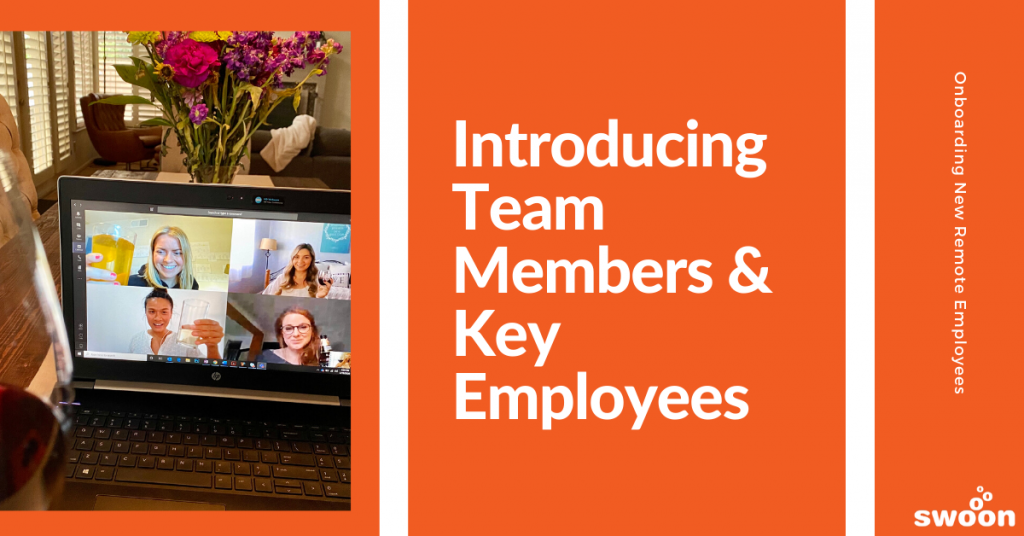
Introducing Team Members and Key Employees
We all know that starting a remote role can leave some feeling isolated and even left out from the team. They haven’t had the chance to connect with the team and doing so online can prove to be very challenging. But, building relationships is well worth the effort! Set up one-on-one meetings and/or a group call so employees can meet the people they will be working with. Not only does this open a path for communication, but it also allows them to feel included within their team. Try having the manager set up bi-weekly team meetings, virtual happy hours or an open chat channel to give everyone on their team time to talk with their new coworker.

Arrange Trainings
Now we know that this is probably self-explanatory, but make sure you set aside time for the new hires to sit down with a hiring manager or a team member to train them on their role. This can be very similar to how you train in the office; however, you will need to adapt to be virtual. Screen sharing is a great way to keep things simple. We find that this is the easiest way to adapt, and it allows the new hire to ask questions in real-time, something that might be more difficult if you were to only do a prerecorded training.

Improving Your Process
Continue to improve your onboarding process to find what bests works for your team and your culture. Ask for feedback and don’t be afraid to be creative in tackling these new challenges. We predict remote hiring will become even more common, so this is a great time to build onto an ongoing process.